
Unity Ads
Unity Ads Launch: $87 per Depositor Across $48K
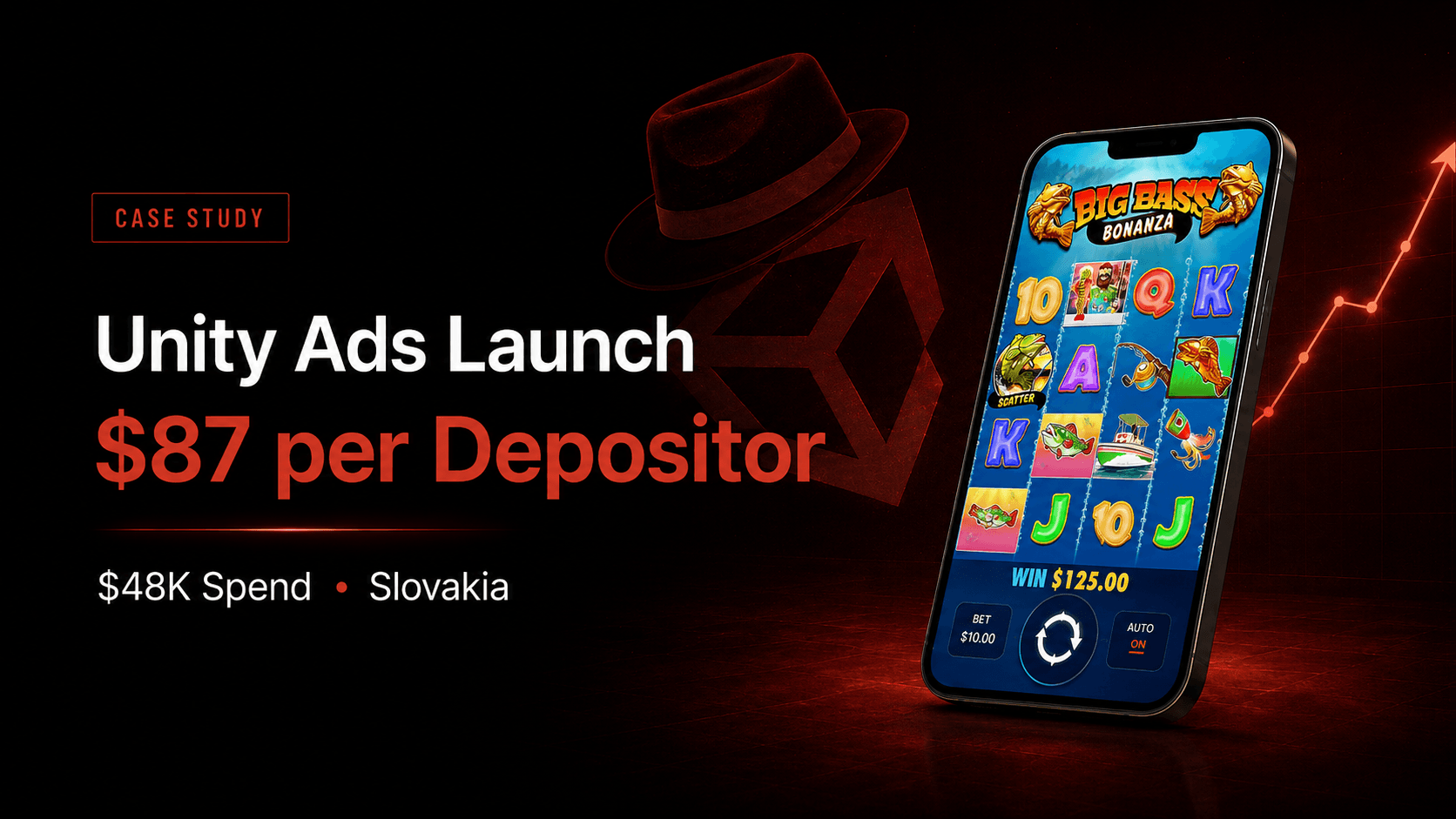
Between April and June, one of our buyers spent $48,000 on Unity Ads into Slovakia and kept the cost of a first-time depositor at $87 the whole way. No cloaking, no account farms, no lucky creative, just a Tier-1 European geo held at a controlled cost for three months straight. That's what an in-app launch looks like when it's run by process instead of hope. Here's the anatomy of it, layer by layer.
Why Slovakia Is a Cost-Control Game
Slovakia isn't a geo you flood with cheap installs and pray on. It's a small Tier-1 European market: fewer installs, but real players, the kind where a first-time deposit is worth real money to the operator. That flips the entire job. You're not chasing volume, you're holding acquisition cost below what a player pays back, and keeping that line as spend climbs.
This run was a spend model for an operator, under NDA, so the brand and the operator's own return stay off the page. That isn't a missing piece, it's the point. On a spend model the operator hands you the budget and holds you to one number: the cost of a real depositor. Ours was $87. Everything below is how it stayed there.
It Starts With Math, Not a Bid
The fastest way to burn a Tier-1 budget is to open the campaign and type a "$10 bid, just to get volume." On a market where installs are scarce and players are expensive, that's how $48K disappears in a week.
The bid isn't a guess, it's an output. Break-even cost per install comes from the deposit payout and the install-to-deposit rate. Your target sits below that by your margin. And Unity's own rule caps the max bid at the target CPI times 1.2. By the time you're setting the number, the number is already decided. Most of the result lives in that discipline, before a single impression is bought.
You Can't Scale What You Can't Measure
In this setup we don't have direct access to the MMP, the app lives with the provider, so every install and every deposit-with-value was pulled from provider exports and reconciled against Unity's own numbers before the budget opened up. When the two didn't match, the gap became a specific ticket, not a shrug.
This sounds like plumbing, but it's the whole foundation. A campaign you can't measure isn't a campaign, it's a donation. ROAS optimization is blind without deposit events that carry a value. Prove the tracking before you scale, never after.
The ROAS Goal Is a Dial, Not a Wish
Unity's ROAS goal isn't a target you set and forget, it's a volume-versus-quality dial. Set it too high on a cold campaign and the algorithm, with no history to work from, narrows the audience so hard it buys almost nothing, zero installs, zero spend, and a buyer convinced the geo is dead when the goal was the problem.
We opened in the 40-60% band to gather signal on real depositors, then eased it down deliberately to widen the audience as the data came in. Lower goal, broader reach; higher goal, pickier algorithm. Knowing which way to turn it, and when, is the difference between a campaign that scales and one that stalls.
Holding the Line for Three Months
None of this is one-and-done. Across three months the work was a loop: blacklisting placements that produced registrations but no deposits, watching click-to-install time for fraud patterns, and comparing cohorts only once they'd matured, because yesterday's install can't have a seven-day number yet.
The result wasn't a spike anyone screenshots. It was a line held: $87 per depositor, across $48,000, on a geo where that cost pays. Roughly 550 real players, delivered at a price that was decided before the first dollar moved.
Summary
- Slovakia is a Tier-1 cost-control game: the job is holding acquisition cost below payout, not chasing cheap installs.
- On a spend model, the number that matters is the cost of a real depositor, ours was $87 across $48K.
- The bid is math, tracking is the foundation, and the ROAS goal is a dial you turn on purpose.
Glossary terms in this article
Unfamiliar with a term? Each links to a full definition in our affiliate & iGaming glossary.
You might also like
Unity Ads for iGaming: How the Source Works and Who It Fits
Unity Ads runs on mobile game inventory and an ML core, so a campaign is a set of signals, not a control panel. How the source actually works and who it fits.
Read article →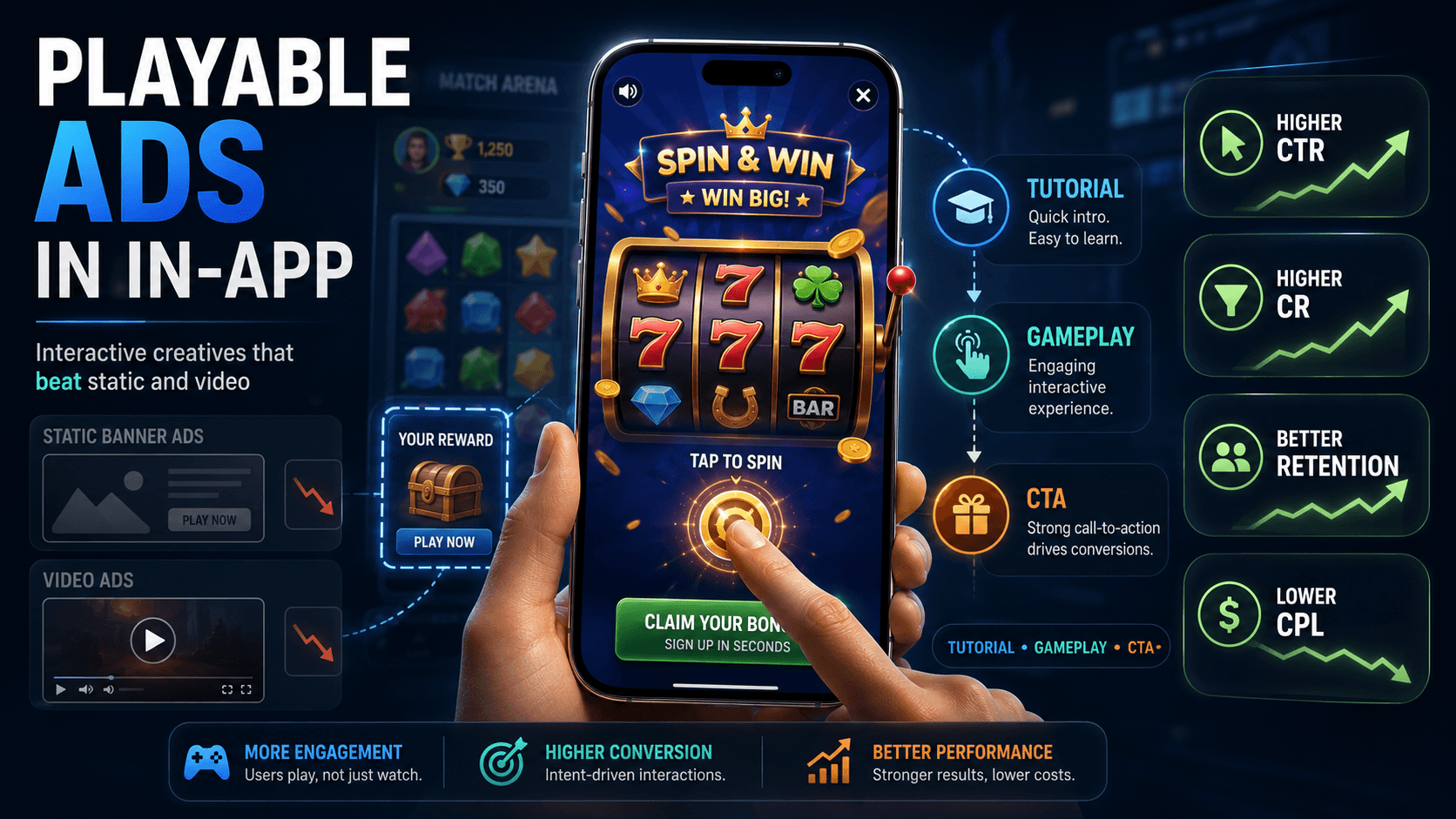
Playable Ads: Why Interactive Creatives Win - and Belong in InApp
Playable ads let users try the offer before they install, breaking banner blindness, lifting CTR, CR and retention, and often cutting CPL by 25-30%. Here's how they work and why InApp is their home.
Read article →
Meta vs Moloco for iGaming: What Scales Better?
Meta vs Moloco for iGaming: which source fits PWA better, which one is stronger for apps, and how to choose the right setup for scaling.
Read article →