
iGaming
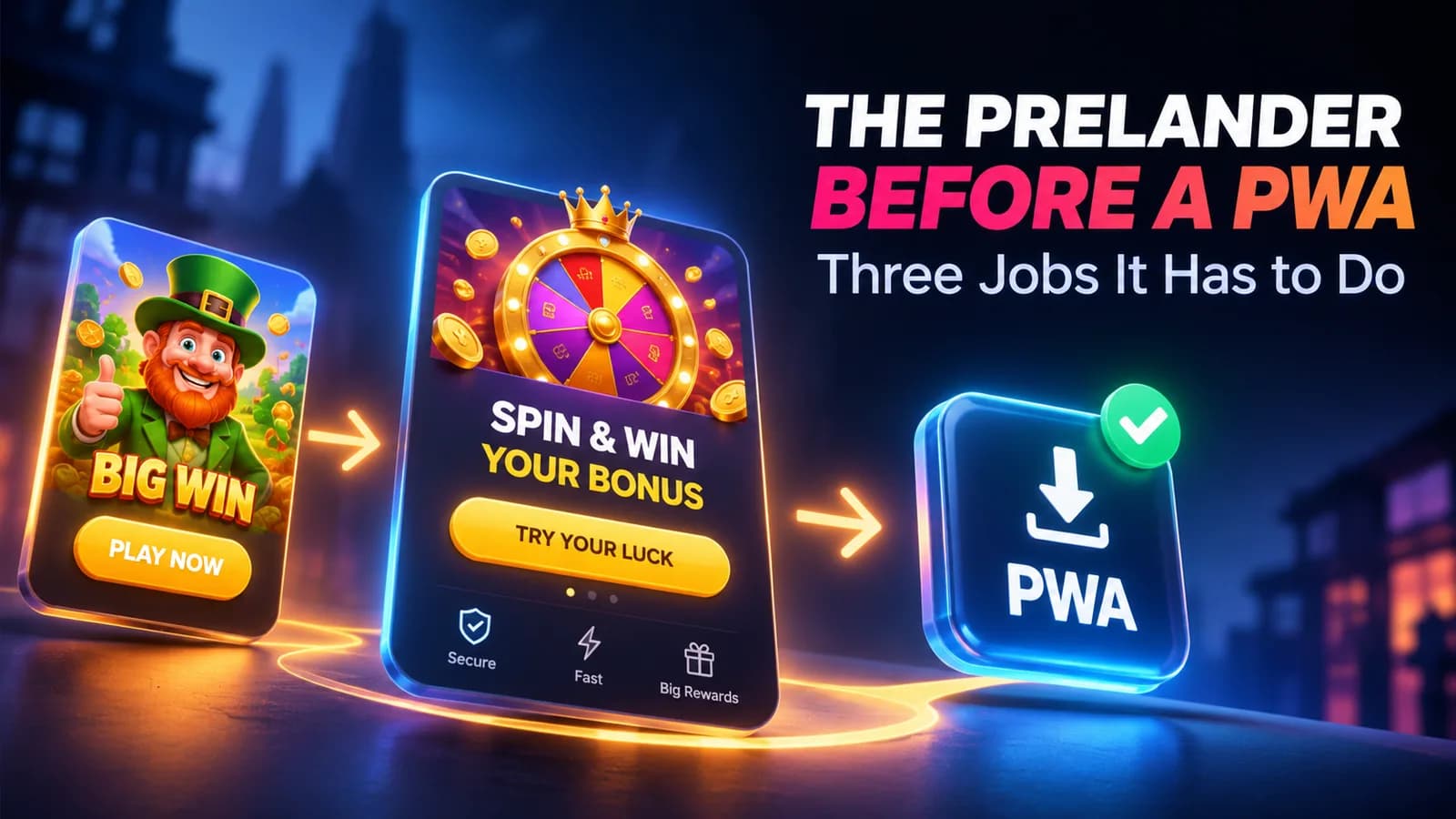
The Prelander Before a PWA: Three Jobs It Has to Do
When a funnel needs to get shorter, the prelander is usually the first thing to go. The logic is simple: fewer screens mean fewer drop-offs and more installs. But an install is not money yet. A funnel without a prelander often brings more installs and fewer registrations, and the difference then has to be explained to the advertiser.
A prelander is not there to look nice. It is a screen with a specific job, and if it is not doing that job, the problem is the screen, not the idea of having one.
The Three-Job Test
Every screen between the creative and the PWA should do at least one of three jobs. A good prelander does all three:
- Warm up. The creative caught attention, but the person is not ready to install an app yet. The prelander explains what comes next and gives one more reason to continue.
- Filter. Accidental clicks drop off here rather than after the install. The people who reach the PWA are the ones who are actually interested, and the stats get cleaner.
- Give a first action. A wheel, a chest, a mini slot or a penalty kick turns an ordinary click-through into a small game. The person has already done something, and the next step comes more easily.
That gives a simple rule. A screen that does none of the three can go. And if there is no screen that does all three, the funnel is missing its most useful step.
What Filtering Changes
The second job is the least visible, yet it has the biggest effect on money. In our practice, install to registration conversion averages 40 to 50%. How high it goes depends on the geo and on whether a game-style prelander warms the player up before the offer.
That is why a prelander almost always "hurts" one number and improves another. There are fewer installs, because some people drop off before installing. But a bigger share of those who install go on to register and deposit. Anyone who looks only at the cost per install will decide the prelander does harm, and will be wrong.
Interactive or Store-Style
The format depends on what sells a particular product.
An interactive prelander sells through emotion: a wheel, a crash game, Plinko, a mini slot. The person plays before installing, and the PWA becomes a continuation of the game rather than an ad.
A store-style prelander sells through trust. The page looks like a familiar app listing: a description, interface screenshots, the file size, a clear install button. There is a firm line here: no fake reviews and no "official" badges the product does not have. Trust built on a fake collapses with the first complaint.
The two formats can be combined into one chain: creative → mini game → app page → PWA. The game brings emotion, the app page brings trust, and the person reaches the install with both.
The In-App Browser Trap
A prelander most often breaks not because of its design but because of the in-app browser. Facebook, Instagram and Telegram open links in their own window, not in Chrome or Safari. There, the interactive part may not load, animations may lag, and the install button may not work.
So a test run before launch is mandatory: open the prelander from the exact social network the traffic comes from, play the game to the end and get all the way to the install. If any step fails, no amount of creative optimisation will save it.
How to Tell If a Prelander Works
Judging a prelander by installs means judging it by the very thing it deliberately reduces. You need to look further down the funnel:
- Registration from install. If it did not grow after adding the prelander, the prelander is not filtering.
- Deposit from registration. Our benchmark: 25% (one deposit per four registrations) is strong, 20% is acceptable, and 15% or lower points to a problem with the offer, not the prelander.
- Variants, not a single screen. In our practice, splitting two or three PWA variants often lifts install conversion by 20 to 40% with no extra spend. The same applies to prelanders: two or three variants per game will tell you more than one "perfect" one.
Most importantly, the creative, the prelander, the PWA and the offer must all be about the same game. If the creative shows one game, the prelander a wheel and the casino a completely different slot, the person will feel misled and leave at one of the steps.
How to Build It Without a Developer
Our platform has 185 no-code game templates that can run as playable ads or as a prelander before the PWA install. A store-style PWA is built in Traffstore from a Google Play link in a few minutes, and the tracker shows each user's path from click to deposit. That way you see what the prelander actually changed in registrations and deposits, not just in installs.
Summary
- A prelander before a PWA has three jobs: warm up, filter out accidental clicks and give a first action.
- A screen that does none of the three can go. A screen that does all three is the most useful one in the funnel.
- Interactive prelanders sell through emotion, store-style ones through trust, and the two can be combined.
- Before launch, test the prelander in the in-app browser of the social network your traffic comes from.
- Judge a prelander by registrations and deposits, not by installs.
A shorter funnel is not always a better one. The better funnel is the one where every screen does its job.
Glossary terms in this article
Unfamiliar with a term? Each links to a full definition in our affiliate & iGaming glossary.
You might also like

The Ban Moved to the Wallet: Gambling Regulators Now Block Payments, Not Domains
In September we wrote that the enforcement point in gambling was shifting from the operator's licence to the payment rail (iGaming Regulation in 2026).
Read article →
What Media Buyers Check Before Sending Traffic to a Casino Affiliate Network
Affiliate networks compete on rates because a rate is easy to compare: it sits right on the offer card. A buyer looks at something else.
Read article →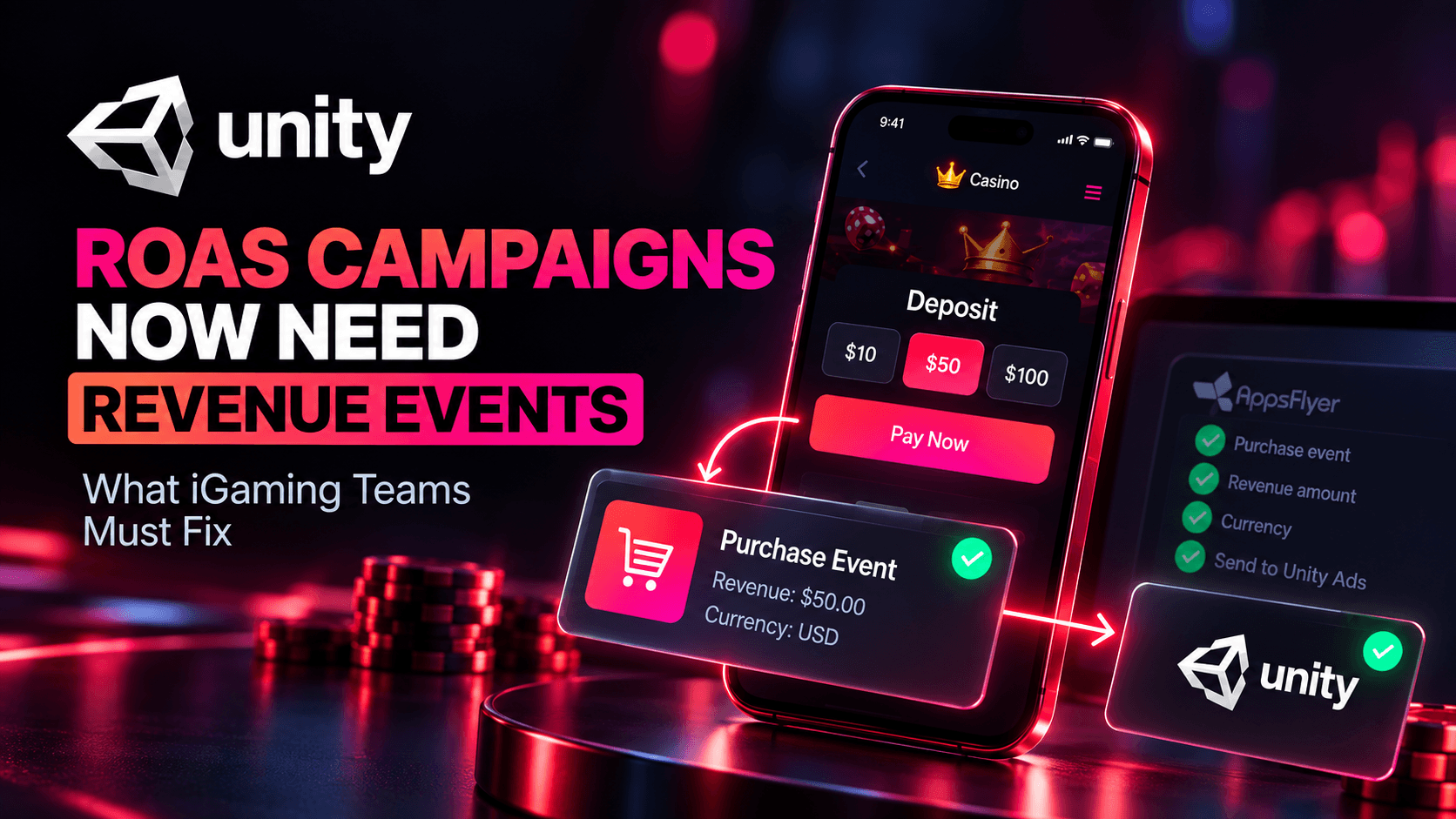
Unity Ads ROAS Campaigns Now Need Revenue Events: What iGaming Teams Must Fix
In early October Unity changed the rules for launching ROAS campaigns. A new campaign will not start until the source receives purchase events with a revenue amount…
Read article →