
iGaming
Slot Accumulation Mechanics: Why Pots and Chests Keep Players Spinning
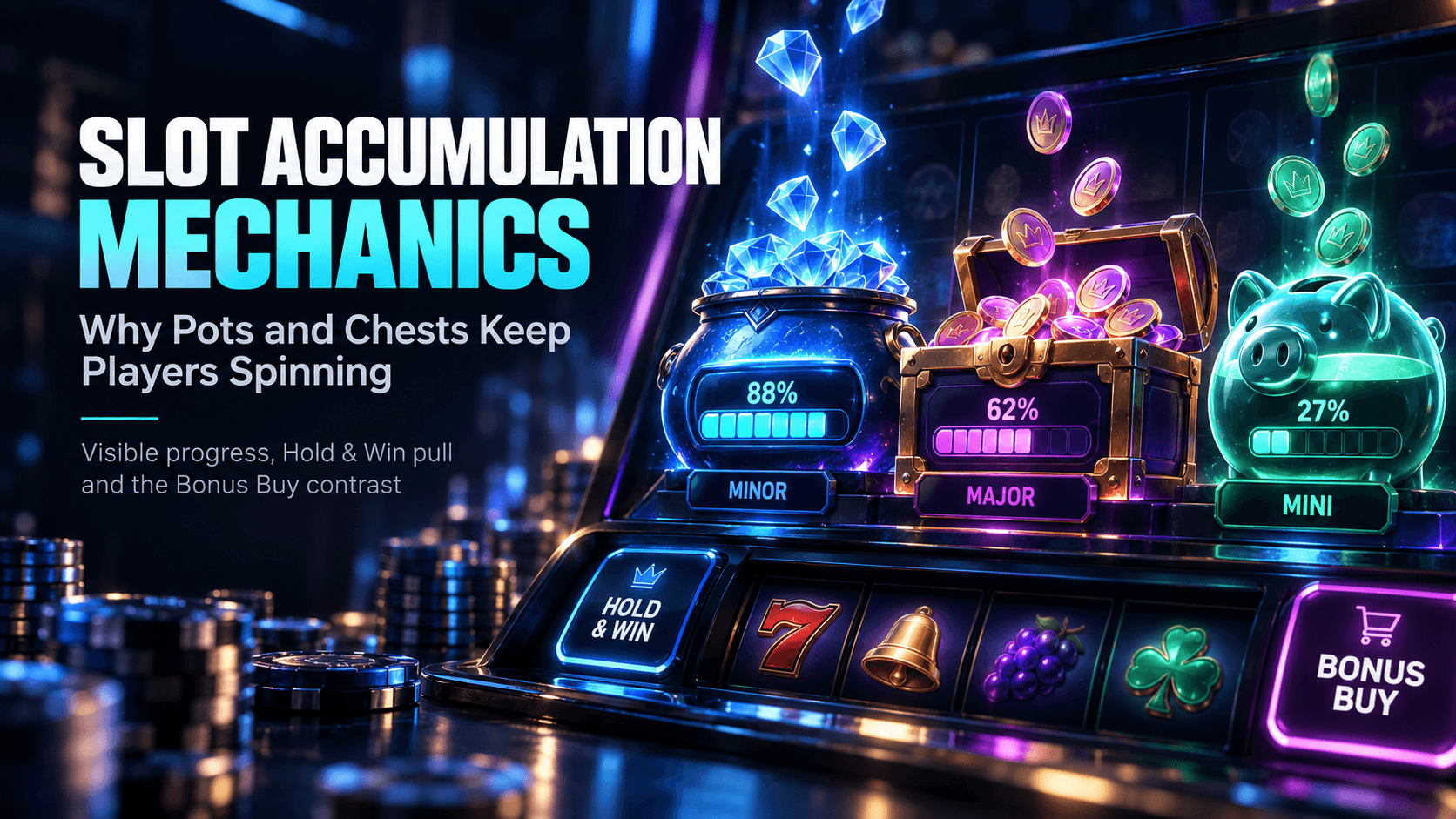
Most spins are forgettable by design: the reels stop, the result is final, and the next spin starts from zero. Accumulation slots break that pattern on purpose. Each spin leaves something behind, and the player starts playing toward a finish line instead of spin by spin. Studios have noticed how well that works, which is why so many new releases are built around a pot, a chest or a piggy bank.
A Bonus You Have to Earn
The mechanic is easy to describe. Certain symbols do not pay out when they land; they go into a container on screen instead. Fill it and something opens: free spins, a multiplier or a jackpot. Some games run three containers side by side, each leading to a different bonus, so the player is always a little closer to one of them.
Pragmatic Play, Hacksaw Gaming, Endorphina, BGaming and Amusnet have all leaned into the format lately, dressing one idea in very different costumes, from sloths and dragons to cursed treasure.
Why Visible Progress Is So Hard to Walk Away From
Behavioural research explained this long before slot studios did. In a well-known experiment with car wash loyalty cards, customers given a card with two stamps already filled in completed it noticeably more often than customers given a shorter, empty card that needed the same number of visits. People speed up when they can see how far they have come.
A filling pot applies that effect on every spin, and leaving stops being a neutral choice: it means walking away from something half-built. Here is the distinction that matters. A multiplier that grows during a session also keeps players going, but it lives in the abstract, and the player has to hold it in their head. A pot is an object on the screen with a visible level. Tangible progress is harder to abandon than abstract progress, and that is the whole engine of the mechanic. It is also why anyone designing or promoting these games should understand it from a responsible gambling angle, not only a revenue one.
Hold and Win Compresses the Same Idea
Hold and Win games pack the same pull into a single bonus round. Coins stick to the grid, each new coin resets the respin count, and the jackpot ladder from Mini to Grand stays on screen throughout. It is accumulation with a countdown attached.
Two September observations show how this plays out in traffic. Coin Strike found a receptive audience in German-speaking Switzerland, yet the creatives built on it were worn out within about a week, after which even clicks dried up. And a deliberately loud Coin Volcano creative for French-speaking Canada worked because it put the jackpot ladder front and centre: the viewer saw what the round could pay before seeing anything else.
Earn It or Buy It
Accumulation has a mirror image, and comparing the two is the most useful way to think about either. The bonus round is where a slot shows off, with its biggest visuals and biggest potential wins. Accumulation makes the player earn the way there through visible progress. Bonus Buy removes the journey and lets them pay to enter at once.
They attract different people. Bonus Buy appeals to experienced players and high rollers who know what they want and do not want to wait, which is why it lifts ARPU and why operators increasingly build welcome offers and tournaments around it. Accumulation suits a broader, less experienced audience and rewards time spent in the session.
For a buyer, the choice follows the traffic. Sending mass social traffic to a slot sold on its Bonus Buy feature means sending people to a feature they will never use. Sending experienced players to a slow-burning collection game means boring them.
Where the Mechanic Carries More Weight
Regional taste decides how much a mechanic matters, judging by Endorphina's breakdown of what works where. In mature European markets the theme gets a game noticed, but what keeps players there is how it plays, so a mechanic like accumulation has more to work with. North American players respond to casino glamour and jackpots, which makes an on-screen jackpot ladder speak their language. Elsewhere the theme does more of the lifting: bold local imagery in LatAm, luck symbols and dragons across Asia, fruit and safari in Africa.
How to Use It in Creatives
- Open on a nearly full container. The viewer grasps the stakes in a couple of seconds and stays to watch it pay.
- Choose a slot the geo already knows. Recognition does half the work: a mechanic inside a familiar game is far easier to sell than a mechanic nobody has seen in a game nobody has heard of.
- Budget for a short creative life. Mechanic-driven creatives fade fast, as Coin Strike showed, so the next variation should be ready before performance drops.
- Match the slot to the traffic. Accumulation for broad audiences, Bonus Buy angles for experienced players.
- Pair the mechanic with a brand. Franchises own the shelf, with Pragmatic holding 20 of the top 30 titles and slots making up 28 of those 30. A mechanic helps a title keep players; recognition is what gets it tried in the first place.
Summary
- Accumulation slots turn each spin into progress toward a visible goal, and leading studios are releasing more of them.
- They work because tangible progress is harder to abandon than abstract progress, an effect documented well outside gambling.
- Hold and Win applies the same pull within a single round, and creatives built on it tend to burn out in about a week.
- Accumulation and Bonus Buy are mirror images: one makes players earn the bonus, the other sells it, and they suit different audiences.
- Mechanics carry the most weight in mature European markets, while North American players respond to jackpots on screen.
If you want to choose slot offers by mechanic, audience and geo rather than by guesswork, we test these combinations every day and teach how to take them apart. Get in touch and we will go through your case.
Glossary terms in this article
Unfamiliar with a term? Each links to a full definition in our affiliate & iGaming glossary.
You might also like

Gambling Traffic in Africa: Small Deposits, Crash Games and One-Brand Markets
The comparison with LatAm is everywhere, and on the surface it holds: a young audience, mobile internet spreading fast, and a population that already bets around…
Read article →
VIP Retention in iGaming: Why Casinos Lose Their Best Players Without Noticing
A casino will spend weeks and a serious budget acquiring one VIP player, and then hand that player's retention to a manager who has about a hundred seconds a day for…
Read article →
Facebook Ads Digest, September 2026: Verification, Assign Partner, Costly Rejects
The autumn storm did not surprise anyone with its force. A ban wave across the turn of August into September has repeated for several years running.
Read article →