Affiliate Marketing
Affiliate Payout Holds: The Media Buyer's Hidden Cost of Financing a Partner for Free

Here is the thing most media buyers have quietly accepted: an affiliate program holding your money for 30 to 45 days is now treated as normal. Nobody blinks anymore. But if you run $50,000 in spend with a two to three week hold and another two weeks to actually pay, you are not just waiting. You are lending your affiliate partner your own money, interest-free. Let's put a number on what that costs, and on how to stop doing it.
Frozen Money Is Dead Capital
Start with the cost nobody prices in. In media buying, capital is not supposed to sit still. You spend, you earn, you reinvest, and the speed of that loop is a large part of your real return. A payout hold breaks the loop. The money you have already earned is stuck in someone else's account, and while it sits there it earns you exactly nothing.
Run the loop at $50,000 a month with five to six weeks between earning and getting paid, and you are permanently financing about a month and a half of your own revenue. That is a five-figure sum sitting idle every single day, money that could be buying traffic at your own return instead of resting in a partner's bank account. Nobody sends you an invoice for it, which is exactly why it goes unnoticed. It is not a fee. It is an interest-free loan you hand over without ever deciding to.
Not Every Hold Is a Scam, and How to Tell
Before you treat every hold as theft, be fair: some are legitimate. A short window exists to catch chargebacks, fraud, and low-quality traffic before money changes hands. On a revenue-share deal, a program genuinely cannot pay you on a player's lifetime value until that value actually accrues. And operators have their own cashflow, especially with new partners who have not built trust yet.
The problem is not that a hold exists. It is a hold that has nothing to do with real risk. When the window is far longer than any fraud or maturation period justifies, when the terms are vague or quietly creep from 14 days to 30 to 45, when "in processing" becomes a permanent status, you are no longer covering risk. You are funding the program's operations. The test is simple: can the partner explain what the hold protects against, and does its length match that reason? If not, the hold is a credit line, and you are the bank.
Ask About Payouts Before You Ask About the Rate
This is the practical shift the smartest buyers have already made: payout terms are the first question, not the last. Not the rate, not the offer, not the guarantee. How and when you get paid decides your real return before any of those do. Before you sign, get clear answers on:
- Hold length, and what resets it. Is it a fixed window, or does it restart on every "review"?
- Payment frequency. Weekly, biweekly, monthly, on request? Cadence matters as much as the number.
- Minimum payout and methods. Thresholds and fees that quietly shave the top off every withdrawal.
- Flexibility. Can you get an earlier or more frequent payout once you have a track record?
- Reconciliation transparency. Can you see how the numbers are counted, or do figures just appear?
- What actually happens on a dispute. Where does your money sit while a disagreement is resolved?
A great rate on a 45-day hold can pay you less, in real terms, than a lower rate that pays weekly. Learn to compare partners on cash velocity, not just on the headline percentage.
The Real Fix Is Structural: Who Finances Whom
Here is the part the payout conversation usually misses. The hold is not a bug you can fully negotiate away. It is baked into the structure of a CPA or affiliate-program deal, where you pay for the traffic up front and then wait to be paid for the result. In that arrangement, someone is always financing the gap, and by default it is you.
A spend model flips the arrangement. When you run traffic for an operator on their budget, the operator funds the media, and you are not carrying weeks of frozen capital to finance anyone. That is not a shorter hold. It is a different cashflow architecture, one where your working capital stays yours. Spend is not automatically the right answer for every team or every offer, but the payout-hold pain is a symptom of the model you chose, and choosing the model deliberately is the real lever.
Cashflow Is the Game
Strip it all back and the point is simple: a business runs on turnover, and frozen money is dead capital. The best media buyers do not only optimize CPA and ROAS. They optimize how fast their money comes back and goes to work again, because a dollar that cycles twice as often does roughly twice the work. Payout terms, holds, and partnership structure are not back-office details. They are the difference between a team that compounds and a team that is quietly, permanently funding someone else's growth.
Summary
- A 30 to 45 day payout hold has been normalized, but on real spend it means you are financing your affiliate partner interest-free.
- Frozen capital is dead capital: money in a hold cannot be reinvested, so it silently drags your real return.
- Some holds are legitimate risk windows; the red flag is a hold whose length has nothing to do with fraud, quality, or player maturation.
- Make payout terms your first selection question, and understand that a spend model changes who finances the gap.
Tired of financing your partners for free? We run traffic for operators on a spend model, where your capital stays working, and we teach how to read the economics of a partnership, not just the metrics of a campaign. Reach out and we'll break it down.
Glossary terms in this article
Unfamiliar with a term? Each links to a full definition in our affiliate & iGaming glossary.
You might also like

The Ban Moved to the Wallet: Gambling Regulators Now Block Payments, Not Domains
In September we wrote that the enforcement point in gambling was shifting from the operator's licence to the payment rail (iGaming Regulation in 2026).
Read article →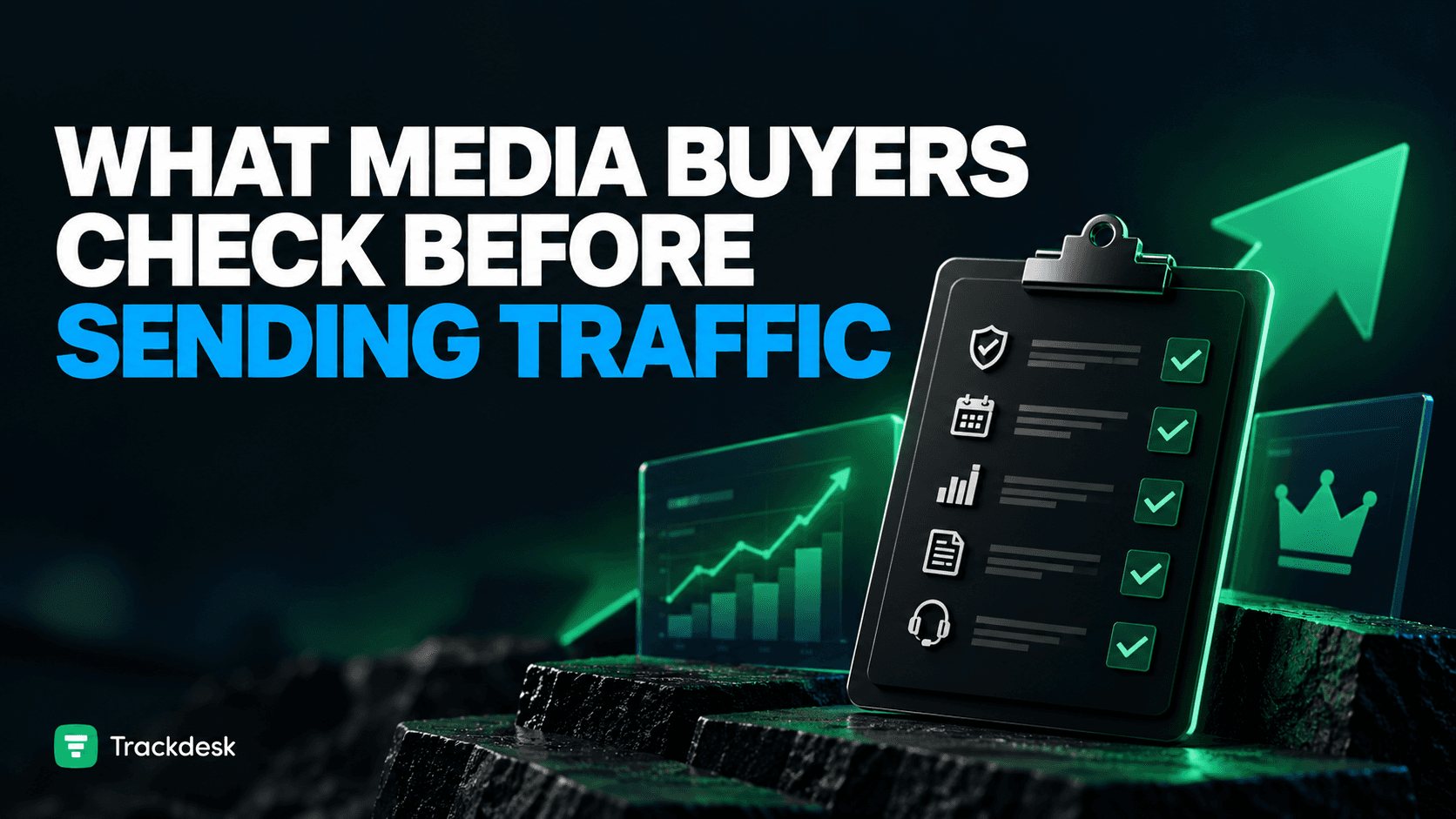
What Media Buyers Check Before Sending Traffic to a Casino Affiliate Network
Affiliate networks compete on rates because a rate is easy to compare: it sits right on the offer card. A buyer looks at something else.
Read article →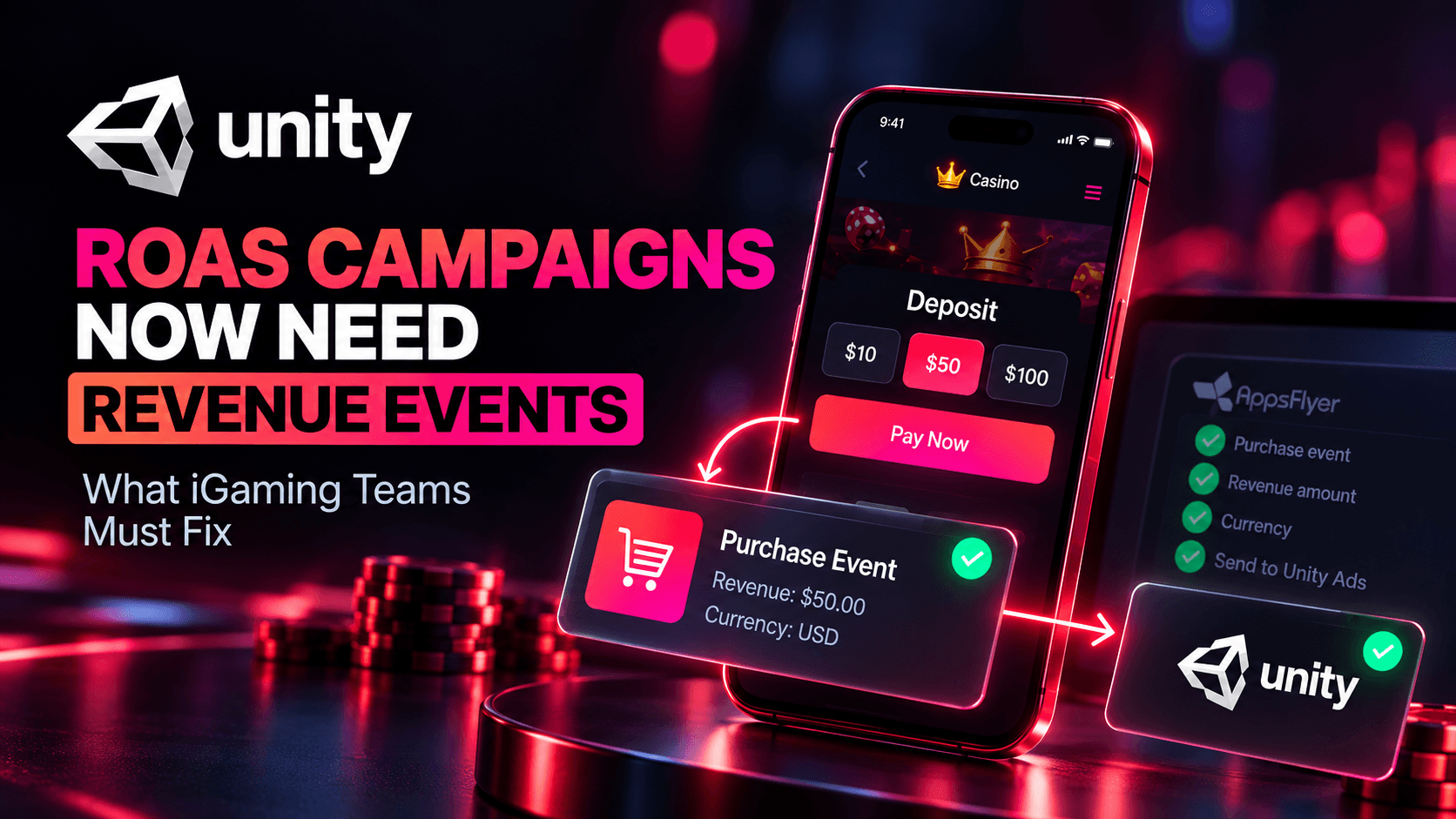
Unity Ads ROAS Campaigns Now Need Revenue Events: What iGaming Teams Must Fix
In early October Unity changed the rules for launching ROAS campaigns. A new campaign will not start until the source receives purchase events with a revenue amount…
Read article →