
Facebook Ads
Meta Andromeda in 2026: The Levers Buyers Aren't Using
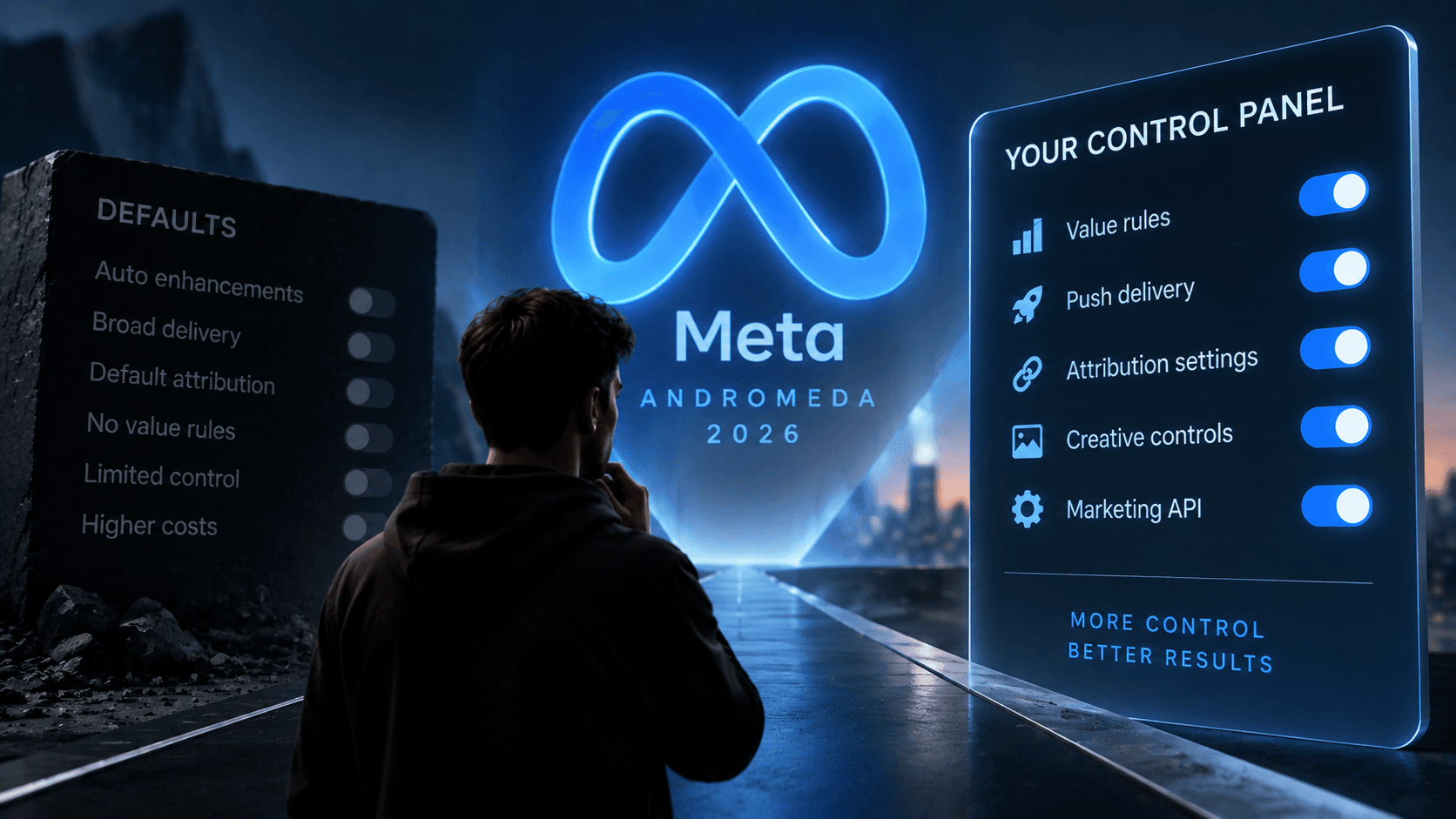
That Andromeda broke familiar things is already documented: similar creatives count as one ad, attribution split, auto-enhancements quietly damaging conversion. But that is only half the story, and the less useful half.
The other half is that alongside those changes Meta handed you a control panel most buyers never opened. This is about that panel: which levers now exist, how to operate them, and why the defaults are working against you.
The Shift That Explains Everything
Start with the frame. The old logic was: you configure, the platform delivers. Now the platform decides, and your job is to steer its decisions.
That is not rhetoric. Andromeda rebuilt delivery into a recommendation system closer in logic to TikTok than to the old auction. The algorithm reads the visual pattern, not the text underneath it. Two clips with different voiceovers but the same structure are twins to it.
The consequence is simple: the fight for results moved from the level of settings to the level of signals you feed the system. And since April 2026 those signals can be steered directly.

Value Rules: The Most Powerful and Most Dangerous Lever
This is the part almost nobody talks about. You can now label your own audiences (quality lead, valuable customer, churned) and change the bid for them anywhere from plus 1000% to minus 90%.
In practice that means paying more for quality and less for those who already bought or churned. It works more reliably than simply excluding an audience, because exclusion removes the signal while a bid rule keeps it and weights it.
But honesty is required here, and Meta warns about it directly: these rules can raise your cost per result by 20 to 1000%. So three constraints to know before switching anything on:
- Do not enable during creative tests. The rules distort the picture and you will draw a false conclusion about the creative.
- You need a lot of data. If your "valuable" segment holds only 30 conversions across 90 days, that is randomness, not a signal.
- For small budgets it does not fit at all.
The Reverse Move Almost Nobody Makes
Here is the most interesting application, and it is not obvious.
A bid rule can be used not to pay extra for warm audiences but to raise the bid on new, cold audiences. The purpose: to stop Meta draining budget into hidden retargeting inside Advantage+.
This is a subtle point. By default the system gravitates toward the audience easiest to convert, meaning people who already interacted with you. It looks like a good result, while in fact you are paying for people who would have come anyway. Raising the bid on cold audiences returns the campaign to real acquisition.
Push Delivery: The Ceiling That Isn't One
Push Delivery to This Ad lets you set what percentage of budget goes to a specific creative and for how many days. You need it so a new ad does not sit idle next to the algorithm's old favourite.
It is off by default. Two details the interface does not tell you:
- The "up to 7 days" label is advice, not a limit. You can set 8 to 30.
- Do not push several ads in one ad set at the same time. Each may fail to get the minimum delivery, and you end up with no conclusion about any of them.
Attribution: What to Look At Now
A click now counts only if the person actually tapped the link. Likes and video views moved into a separate engage-through column. The practical rules:
- Orient on link clicks specifically, and do not mix them with engage-through in one pile.
- For leads use a one-day window, for expensive actions seven days on click.
- Do not change attribution on running campaigns. It resets learning.
The Defaults Working Against You
Advantage+ Creative Enhancements are on by default and change your ads without asking: colour, animation, rewritten text, music, image stretching.
The most harmful is spotlights, which mixes in random screenshots and fragments of your site. It raises lead cost, drops quality, and is invisible in the standard report. To see where budget went you have to switch on the breakdown by delivery and placement.
What to turn off before launching new campaigns: site links, website highlights, spotlights, catalog item insertion, related media, and auto-generated images. On campaigns that are already converting, leave it alone.
When Automation Starts Paying
Through a system user and the Marketing API you can pull spend, cost per result and segments without manual reports, build your own dashboards, and rely on the tracker rather than the ad account. Bid rules are available through the API too.
The benchmark is simple: this makes sense from around ten accounts. Below that, manual work is cheaper than maintaining the integration. And a point of principle: auto-rules and "the tracker as the source of truth" are your workflow, not a Meta feature.
The Order to Switch This On
The most common mistake is enabling everything at once and losing the ability to tell what caused what. The working order:
- Turn off the excess first. Auto-enhancements before launching new campaigns, then check via breakdown that budget goes where you think it does.
- Fix attribution. Separate clicks from engage-through, set the correct windows. Without this every later decision runs on crooked data.
- Test creatives in clean conditions. No value rules, no push delivery.
- Once you have a winner, give it push delivery. One at a time, not several in one ad set.
- Switch value rules on last, and only once you have enough conversions for the segment not to be an accident.
- Add API automation when you pass roughly ten accounts.
Summary
- Andromeda did not only break the familiar, it handed over controls almost nobody uses.
- Value rules are the most powerful (plus 1000% to minus 90%) and the most dangerous: Meta itself warns of cost per result rising up to 1000%.
- The most interesting use is the reverse one: raise the bid on cold audiences so the system stops draining budget into hidden retargeting.
- Push delivery is not capped at seven days, but only one ad per ad set should be pushed.
- Default auto-enhancements are invisible in the standard report and have to be found through breakdown.
- All of this has an order. Enable it out of order and you cannot tell what worked.
Glossary terms in this article
Unfamiliar with a term? Each links to a full definition in our affiliate & iGaming glossary.
You might also like

Casino Player Reactivation: Why Sending a Bonus Doesn't Work
Most companies build reactivation as a single switch: the player disappears for N days, we send a bonus, we wait.
Read article →
How to Build an iGaming Media Buying Team That Doesn't Fall Apart
Teams are collapsing across the vertical right now, and it is not a run of bad luck. ROI in iGaming has fallen to what practitioners are calling historic lows…
Read article →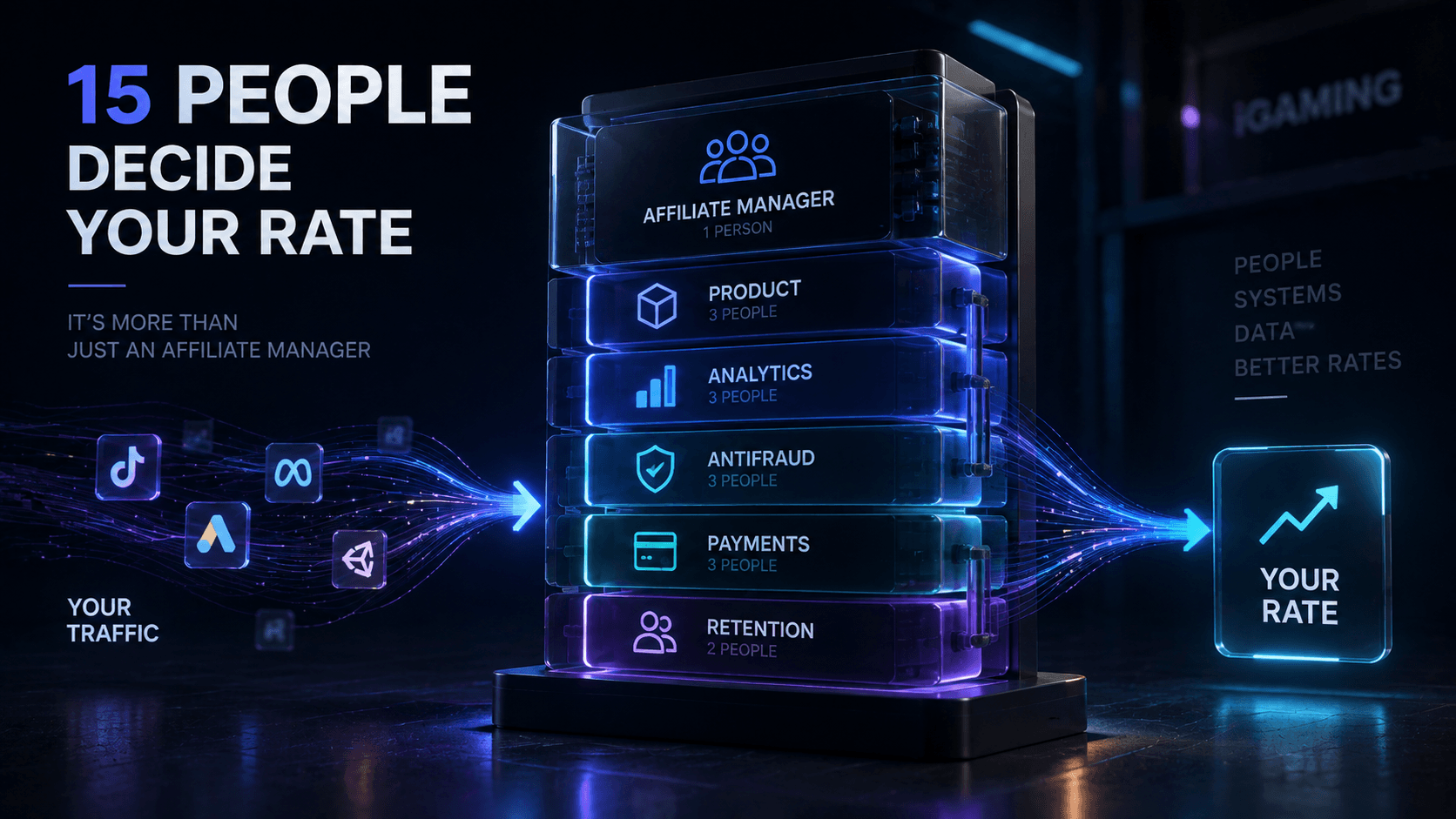
How a Casino Works Inside: The 15 People Who Decide Your Rate
You talk to one person, the affiliate manager. Between your click and your rate stand more than fifteen people across five teams, and almost every one of them can save…
Read article →