
iGaming
The Anatomy of a Cult Slot: The Mechanics That Actually Sell
Cult slots aren't luck. They fuse a recognizable visual identity, retention mechanics, and psychology into something that clips well and sells traffic. Here's the anatomy.
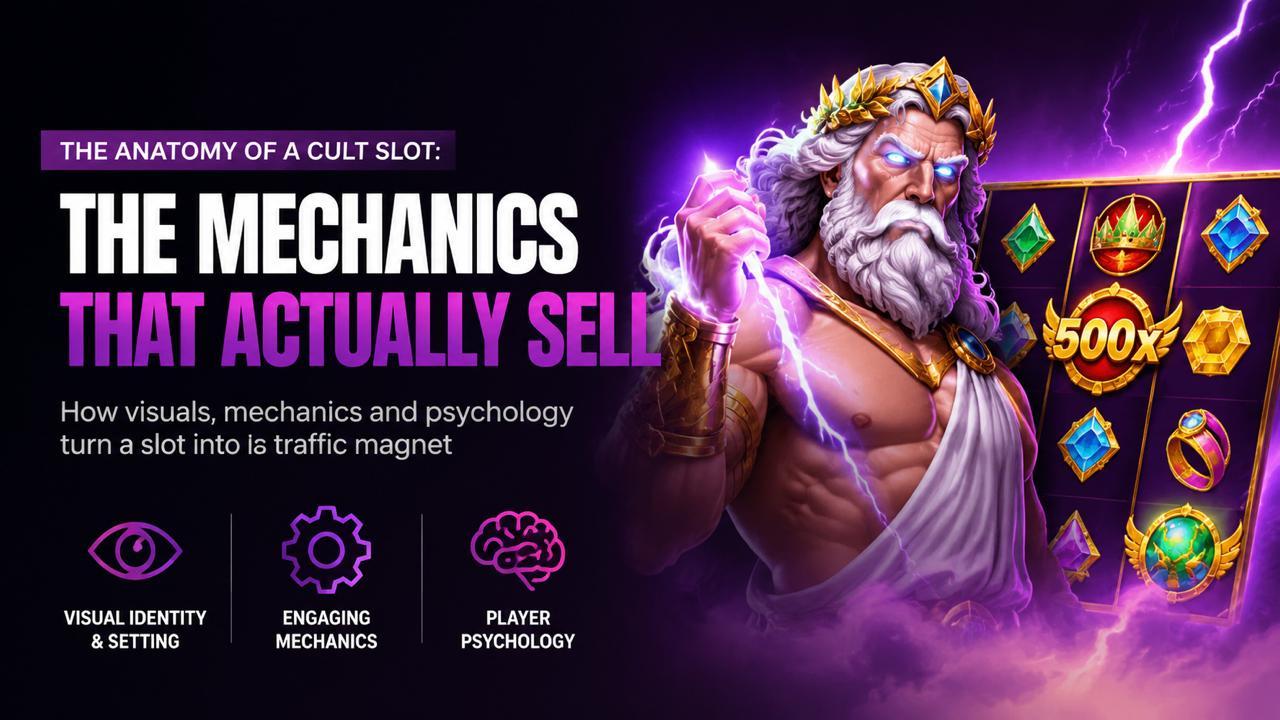
Some slots become a media franchise that lives in creatives, streams, and the minds of media buyers. Others launch and vanish within a week. The difference isn't luck, and it isn't the theme alone, it's how three things come together in the product: visual identity and setting, mechanics, and psychology. Let's break down that anatomy with no filler: what makes a slot recognizable, what keeps a player in the session, why these slots clip so well for streams and creatives, and how all of that turns a slot into a magnet for traffic.
The Slot Market Is a Shelf: Why Most Games Are Never Seen
A new slot's biggest problem isn't quality, it's visibility. A casino lobby works like a supermarket shelf: around 30 games make the first screen, up to 300 fit the whole homepage. Beyond that, players barely scroll, at best they search for a specific title by name. So only a tiny fraction of the catalog ever gets a real chance to be seen.
And the catalog is enormous and growing daily. There are already more than 37,000 slots on the market, with roughly 400 new ones added every month. The math is simple: less than 1% of games physically make the homepage. The rest settle into the "tail," and by analyst estimates around 90% of slots dissolve there, generating almost no turnover. And that's despite each slot carrying not just development cost, but marketing, operator integrations, and operations. How many of them ever recouped is an open question.
That's the fork that decides a slot's fate. Either the operator pours serious cash into promotion and integrations to push the game onto that shelf, or the slot is built so it gains hype on its own and breaks through without a million-dollar budget. The second path is what this article is about. For a buyer this isn't abstract: pick a recognizable, hyped slot and you inherit its ready-made attention; pick a nameless one and you pay for recognition out of your own pocket.
Why Some Slots Become Cult
The best proof that this is a system, not chance, is Pragmatic Play's dominance. Gates of Olympus, Sweet Bonanza, Big Bass Bonanza, and Wolf Gold have held the most-played rankings for years. One provider can't "get lucky" that many times in a row. It found a formula.
That formula stands on three legs: strong visuals and setting make the slot recognizable, mechanics keep the player in the session, and psychology turns play into a habit. Gates of Olympus launched in 2021 and took "Game of the Year" at the EGR Awards that same year. Let's go through all three legs in turn.
Visuals and Setting: Why the Character Matters as Much as the Mechanic
Mechanics keep a player in the session, but a slot gets noticed and remembered because of its visuals. Theme, character, and setting can't be underestimated: they're what make a slot recognizable in half a second and give it that meme-worthy code.
Gates of Olympus isn't an abstract 6x5 grid, it's Zeus, Olympus, and purple lightning. Sweet Bonanza is a candy world that reads without a single word. This visual code works for the buyer directly: a recognizable image is cheaper in the auction, drives higher CTR, and punches through banner blindness more easily.
A strong setting delivers two more things. First, the character and the world become the hero of the creative: the reaction to "Zeus dropped a 500x" is sold not by the math but by the image of a god hurling lightning. Second, the theme decides which GEO and audience the slot fits: mythology, sweets, Egypt, horror, or crime all land differently across markets. So choosing a slot to run traffic on is always about both the mechanic and the visuals plus theme, never just one.
The Mechanics That Hold and Sell
If visuals attract, mechanics retain. Three main building blocks do the work here.
Cascades (tumble). Winning symbols disappear, new ones fall from above, and a single spin turns into a series of events. Psychologically, a cascade creates an "unclosed loop" the brain wants to close, and the dopamine hits on the anticipation of continuation. That's why cascade slots produce the longest sessions, and it's a gift for creatives: a single spin already contains a story arc.
Multipliers and max win. In Gates, multipliers reach 500x in the bonus and the max win is 5,000x. Sweet Bonanza tops out at 128x multipliers. At the extreme end, providers like Nolimit City engineer their entire catalog around variance: a title like Tombstone Slaughter reaches up to 500,000x your stake. For a buyer, max win is a clear "big number" hook, but on its own it's worthless without a clippable mechanic behind it.
Pay-anywhere (win-all-ways). A win counts when the required number of symbols are on screen, regardless of position. No paylines to explain. That sharply lowers the entry barrier for a mass audience: less cognitive friction in the creative, higher CTR, and easier onboarding after the click.
The Psychology That Actually Keeps Players
Beneath the visuals and mechanics sit a couple of proven psychological principles. Understanding them isn't about manipulation, it's about seeing why a slot converts:
- Near-miss. When symbols land just short of a line, it activates the dopamine system almost like a real win. Research points to an optimal near-miss frequency around 30%, exactly where player persistence peaks.
- Loss aversion on the multiplier. When a multiplier grows over a session, leaving feels like abandoning progress, even though the multiplier resets anyway. The brain frames the exit as a loss.
This is exactly why "just a good slot" and "a slot you can't put down" are two different things.
Why These Slots Blow Up on Streams
Now the bridge from product to traffic. Gates of Olympus and Sweet Bonanza became streaming phenomena for a reason. High volatility produces dramatic swings, and a strong setting makes every big moment a spectacle, which is exactly what viewers want to watch.
The key insight: viral slots create stories. People don't remember the average spin, they remember the moment Zeus dropped a 500x. That event needs no explanation, the reaction alone tells the story, and it's perfect material for a short video. On top of that, audiences follow personalities (Roshtein, Trainwreckstv) rather than games, so a ready warm-up channel already exists around top slots. And the bonus buy feature lets a streamer or creator jump straight into the most dramatic part with no waiting.
For a buyer, that means a top slot arrives with free cultural context: people already recognize it, emotions are already attached to it, and that makes attention cheaper.
How to Pick a Slot Offer: Checklist
- Does the slot have a recognizable visual code and a strong setting (something to build the creative hero around)?
- Do the theme and character land with your GEO and audience?
- Does it have cascades or an accumulating multiplier (something to clip)?
- Is the entry mechanic simple (pay-anywhere), with no paylines to explain?
- Does the max win give a "big number" hook without promising a guaranteed win?
- Is the slot present in streams and spy tools (cultural context and references exist)?
- Do RTP and volatility match the GEO and player type, and is there a bonus buy for quick drama?
Working With Slot Offers
What works
- Make the character and setting the hero of the creative, not just the win figure
- Build the creative around one recognizable moment (cascade, multiplier, reaction)
- Use a top slot's recognition to make attention cheaper
- Match the slot's theme and volatility to your GEO's expectations
What to avoid
- Promising a guaranteed win, it's both a lie and a policy violation
- Fake UI or doctored balance screenshots
- Picking a slot on max win alone when the setting and mechanic are dull to clip
- Ignoring RTP and volatility, a pretty slot with bad math will burn budget
Summary
- The market is saturated: 37,000 slots, less than 1% reach the casino homepage, so a slot either buys its way to the top or fires on its own.
- Cult status is a combination of three things, visuals and setting, mechanics, and psychology, not mechanics alone.
- Visuals make a slot recognizable and cheaper in the auction, mechanics keep it in the session, psychology turns play into a habit.
- For a buyer, a top slot means cheaper attention plus ready-made emotional context, but you pick the offer on theme and clippable mechanics, not on a big number alone.
A slot that sells is engineered attention, not magic. The winner is whoever reads the setting like a brand, the mechanic like a creative, and the math like a buyer, and builds the creative around one recognizable moment rather than a promise of winning.
Want to pick slot offers for your GEO and build creatives around them that don't burn budget? Reach out, we'll break down the theme, mechanics, approach, and production.
Glossary terms in this article
Unfamiliar with a term? Each links to a full definition in our affiliate & iGaming glossary.
You might also like
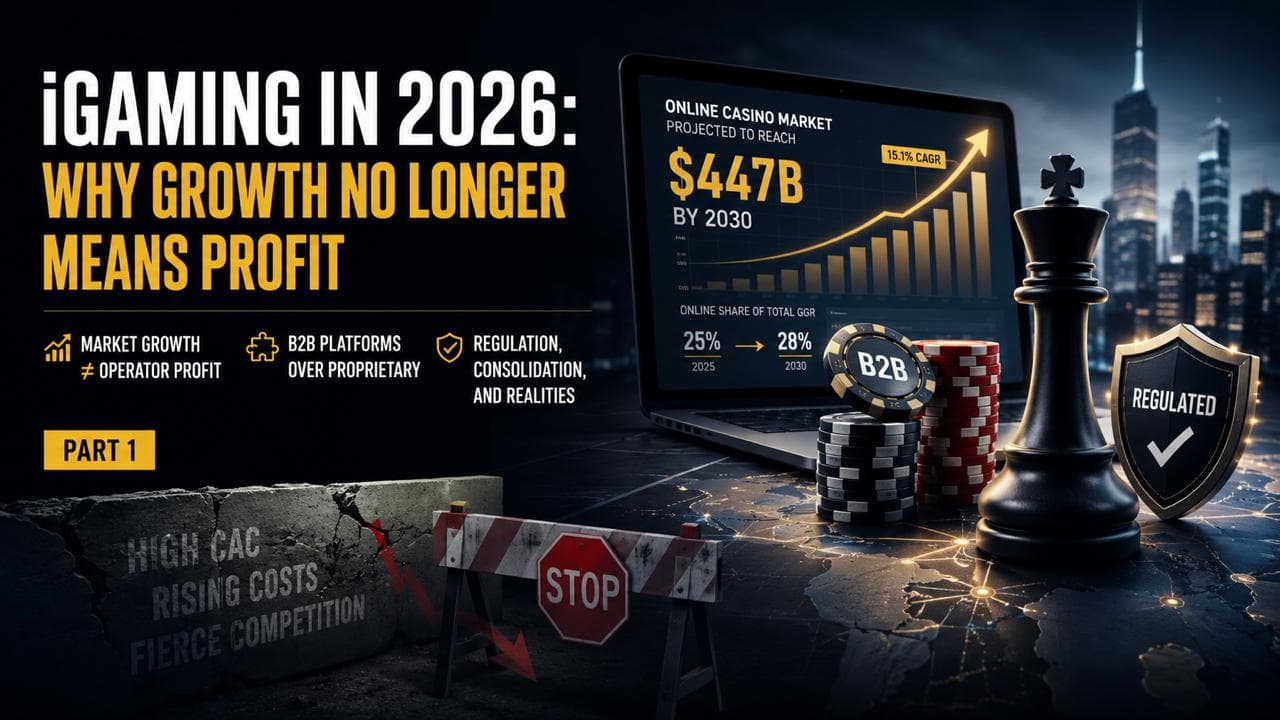
iGaming en 2026: Por qué el crecimiento ya no significa ganancias para los operadores
El mercado de casinos online podría alcanzar los $447B para 2030, pero el crecimiento ya no garantiza ganancias para los operadores. Sobre el aumento de los costos de entrada, la muerte de las plataformas propietarias y la presión regulatoria. Parte 1.
Read article →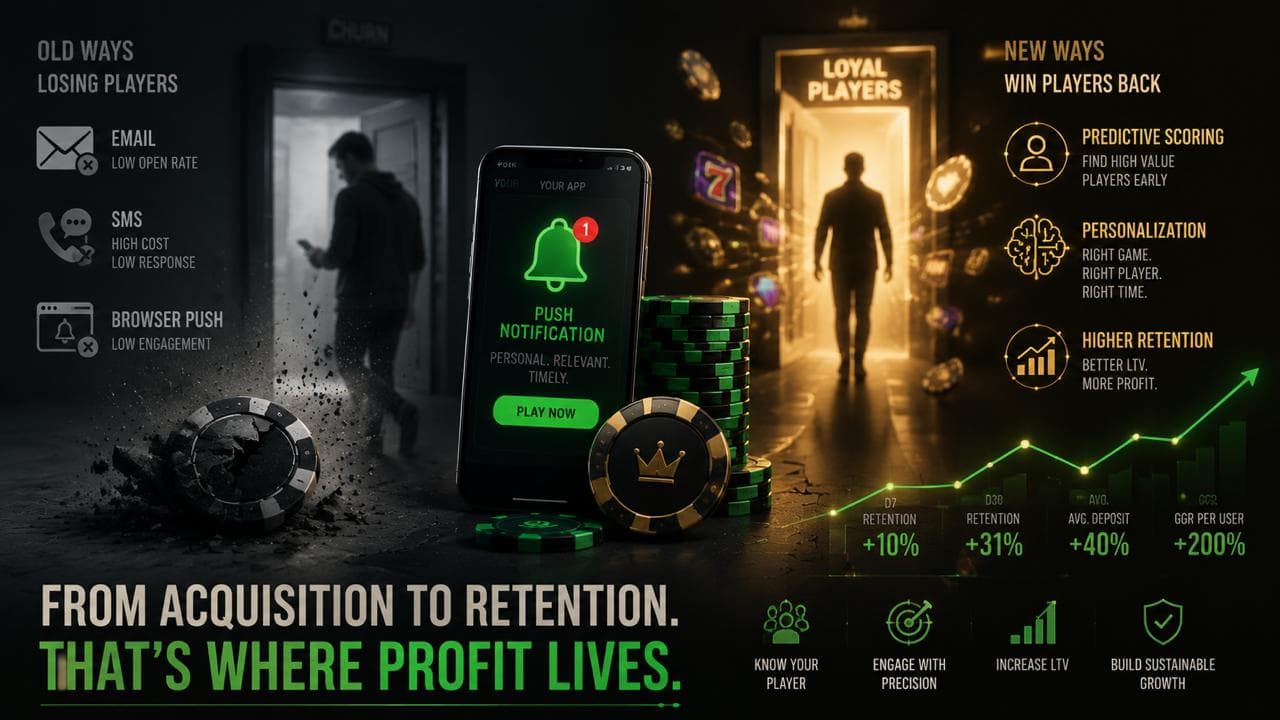
iGaming en 2026: Cómo recuperar al jugador a través de la retención
Los canales de retención clásicos están muriendo mientras la batalla se traslada a la personalización y la puntuación predictiva. Sobre aplicaciones, recomendaciones de ML, Tier-1 vs Tier-2/3, y lo que significa para el tráfico. Parte 2.
Read article →
La creatividad como consumible en iGaming: Nuevas reglas de Facebook en 2026
Descubre por qué las antiguas estrategias creativas ya no funcionan en iGaming. Cómo combatir la fatiga de la audiencia, usar herramientas espía y construir embudos efectivos en Facebook Ads.
Read article →