
iGaming
Meta's $3+ Billion Secret: Double Standards in iGaming Advertising
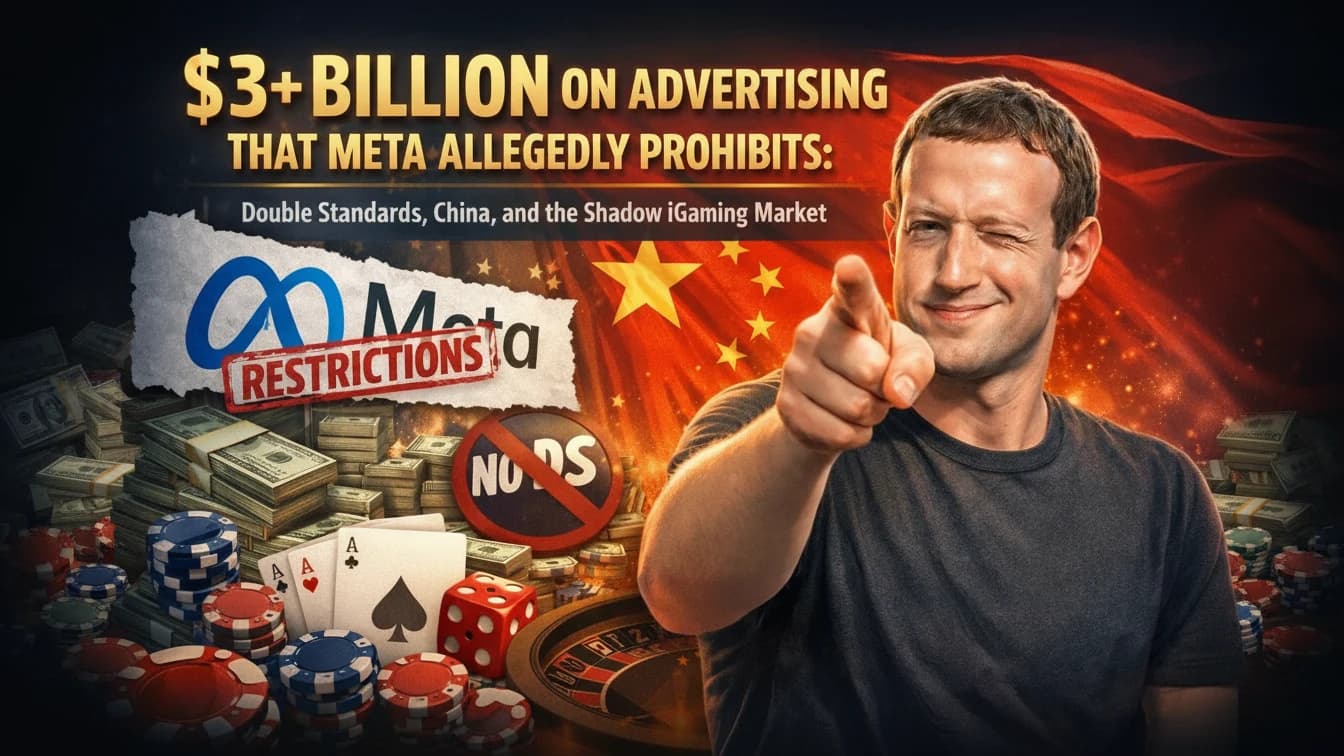
Meta publicly promotes a safe advertising ecosystem, but internal assessments and investigations reveal that revenue from gray categories can become too tempting to ignore. In iGaming, this is particularly evident: some advertisers get banned for a single creative, while others dominate the auction for weeks.
The $3 Billion Question: Why iGaming Advertisers Feel the Pain
In gambling advertising, Meta often acts not as a "platform of rules" but as a "platform of balance" between safety, policies, and revenue. The market sees asymmetry: bans as a risk and reputation management tool, but not always as a tool of fairness.
For newcomers, this matters for one reason: when you run casino or PWA campaigns, you're competing not just with creatives and offers, but with "system allowances" that vary depending on source, setup, agency, and account history.
The Competitive Disadvantage
If you're a small media buyer launching your first iGaming campaign, you face:
- Instant moderation for aggressive creatives
- Stricter policy enforcement on new accounts
- Limited appeal options when banned
- Higher CPM due to restricted reach
Meanwhile, established players with millions in monthly spend often enjoy:
- Longer review cycles allowing more impressions before bans
- Agency partnerships with direct Meta support
- Multiple account structures to distribute risk
- Priority support for account appeals
What the Numbers Really Show
According to a Reuters investigation, Meta's internal data estimated that over $3 billion in revenue came from fraudulent ads by Chinese advertisers. Chinese advertisers collectively brought Meta more than $18 billion in 2024, representing over 10% of the company's total revenue.
Breaking Down the Revenue
Meta's internal assessment indicated:
- 19% of Chinese ad revenue linked to fraud, unlicensed gambling, fake products, and other banned content
- China became the source of approximately 25% of all fraudulent and prohibited ads in Meta's ecosystem
- 46+ million ads blocked from Chinese business partners over 18 months (according to Meta)
| Category | Amount | Percentage |
|---|---|---|
| Total Chinese Ad Revenue (2024) | $18+ billion | 10% of Meta's total |
| Estimated Fraud-Related Revenue | $3+ billion | 19% of Chinese revenue |
| Fraudulent Ads Blocked | 46+ million | N/A |
| China's Share of Platform Fraud | ~25% | Of all banned ads |
Moderation Hypocrisy: Why Some Get More Freedom
The industry operates on a simple truth: Meta's moderation isn't the same rules for everyone, but a variable depending on the advertiser's "risk profile." Training products and industry funnels directly address this, claiming the platform "selectively bans what it allows others."
Big Money, Bigger Exceptions
The scandal's core isn't that fraudulent ads appear on the platform, but that internal assessments show: this may be a predictable part of the business model, not a random "moderation error."
Reuters materials mention that Meta anticipated significant revenue from ads linked to scams and banned products, simultaneously assessing "higher-risk" impressions at billions per day. Against the backdrop of the China story, Reuters reported that Meta's internal calculations linked over $3 billion in Chinese ad revenue to scams and other banned categories.
Why Blackhat Benefits the System
The controversial truth: black and gray advertisers often:
- Pay higher CPMs due to aggressive bidding
- Scale faster with multiple account structures
- Push auctions higher, directly impacting platform revenue
- Test boundaries that legitimate advertisers avoid
This creates a "privilege market": rules written for everyone, but actual auction access depends on history, volume, partnership chains, and how noisy a case becomes.
Even if Meta publicly declares active fighting and mass blocking, the discussion arose because internal documents and investigations question equal approaches and priorities when billions are at stake.
What This Means for iGaming Media Buyers in 2026
Understanding the Playing Field
- You're not competing on equal terms - larger spenders and established accounts have structural advantages
- Moderation timing varies - some ads run for days before review, others get instant bans
- Appeal success depends on account value - higher-spending accounts get more attention in disputes
- The rules are guidelines, not guarantees - enforcement varies by risk profile
Strategic Implications
If you're a small buyer:
- Focus on compliant approaches first
- Build account history with safe campaigns
- Gradually test boundaries once established
- Use multiple smaller accounts to distribute risk
If you're scaling:
- Work with agencies with direct Meta relationships
- Document everything for appeals
- Understand your account's "risk budget"
- Monitor competitors to see what's passing moderation
If you're going gray:
- Understand the real risks beyond just bans
- Know that moderation bias exists but isn't guaranteed
- Have backup accounts and payment methods ready
- Accept that rules can change overnight
The Reality Check
Meta isn't "holy" or "evil" - it's a corporation balancing risk, reputation, and revenue, sometimes choosing revenue until it becomes a public scandal.
For iGaming, this creates a reality where the market lives not just by rules, but by opportunities that open in gray zones while the system tolerates them.
Key Takeaways
- $3+ billion in questionable ad revenue suggests systemic tolerance
- Moderation isn't equal - account history and spend matter
- Chinese advertisers represent 10% of Meta's revenue with looser enforcement
- The auction favors those who push boundaries and survive
- Small buyers face stricter moderation than big spenders
What You Can Do
- Understand your competitive position - new accounts face higher scrutiny
- Build account value before testing limits - establish trust with compliant campaigns
- Study what competitors get away with - moderation varies by vertical and region
- Have contingency plans - account bans happen, be prepared
- Consider agency partnerships - direct Meta relationships help with appeals
The iGaming advertising landscape on Meta is uneven by design. The question isn't whether double standards exist, but how to navigate them while building sustainable campaigns.
Need help navigating Meta's complex moderation landscape for iGaming campaigns? Contact our team for strategic consultation on compliant and effective advertising approaches.
Glossary terms in this article
Unfamiliar with a term? Each links to a full definition in our affiliate & iGaming glossary.
You might also like

The Media Buyer on Three Teams: What Leaks From an iGaming Team
A team lead has plenty of ways to check a buyer: reports, reconciliation against the tracker, daily check-ins. The most accurate one needs none of them.
Read article →
Slot Accumulation Mechanics: Why Pots and Chests Keep Players Spinning
Most spins are forgettable by design: the reels stop, the result is final, and the next spin starts from zero. Accumulation slots break that pattern on purpose.
Read article →
Gambling Traffic in Africa: Small Deposits, Crash Games and One-Brand Markets
The comparison with LatAm is everywhere, and on the surface it holds: a young audience, mobile internet spreading fast, and a population that already bets around…
Read article →